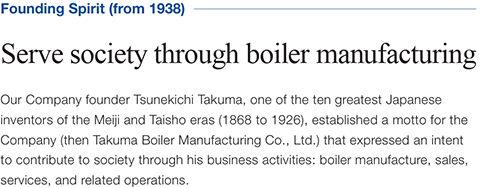
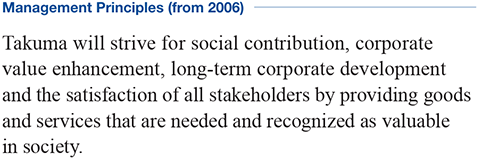
Founder Tsunekichi Takuma invented the Takuma boiler in 1912, making a significant contribution to the development of Japanese industry. He then founded Takuma in 1938 with the founding spirit of “Serve society through boiler manufacturing.” Since that time, we have carried on Takuma’s philosophy while manufacturing an array of boiler types and entered the environmental and sanitation field such as waste treatment plants and water treatment plants while taking advantage of boiler technologies. Also, we have contributed to the development of society and to providing solutions for challenges while broadening our businesses with a focus on energy use and environmental protection. The Group’s Management Principles derive from its founding philosophy, and Takuma retains an unchanging system of values that seek to contribute to the long-term, sustainable development of society through its business activities.
View moreAs the impacts of climate change increasingly manifest themselves, for example in the form of larger-scale natural disasters, renewable energy is attracting high expectations as a path by which we can realize a carbon-free society. In addition, there is continuing robust demand in the Group’s principal business domains, such as demand for replacements and service life extensions of aging infrastructure. At the same time, the business environment is expected to undergo major changes over the medium and long term, including shifts in demand in response to changes in the structure of society, for example due to the shrinking and aging of Japan’s population; increased reliance on comprehensive contracts as part of a trend to outsource government services; and increasing sophistication and diversity in customer needs in order to solve regional issues.
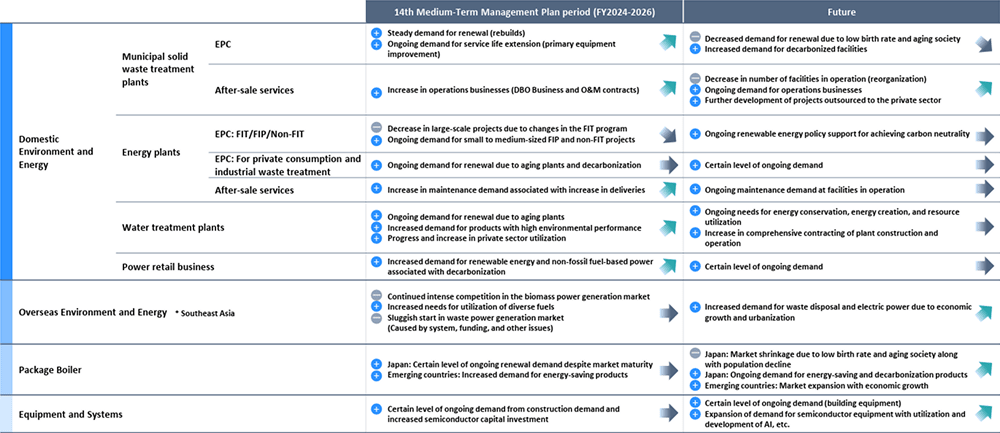
Recognition of the Market Environment in the 14th Medium-Term Management Plan
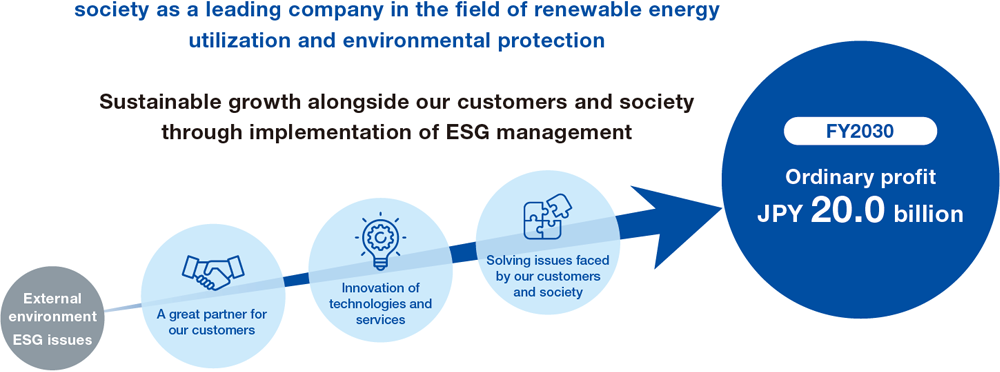
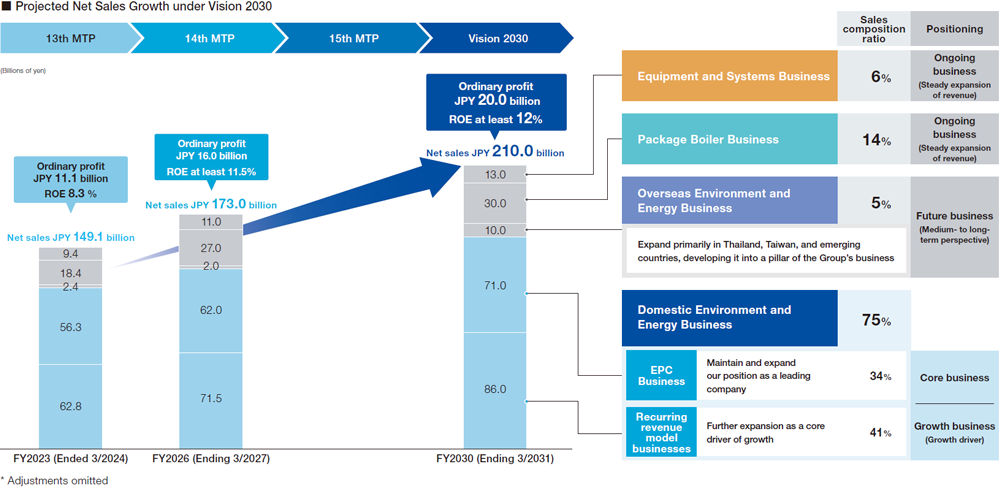
Global issues that merit concern include the growing seriousness of the problem of climate change; the worsening of the sanitation environment due to rapid population growth and urbanization, particularly in emerging nations; and increasing energy demand. At the same time, domestic challenges like falling internal demand caused by the shrinking and aging of Japan’s population, shortages of human resources and future leaders, tight financial conditions affecting government, and aging infrastructure are triggering major concerns about how a sustainable society can be realized going forward. Based on these medium- and long-term trends and social issues, we have formulated Vision 2030 as a long-term vision that will serve as guidelines for the Group’s medium- and long-term management.
In keeping with this vision, the Takuma Group will implement Environment, Social, and Governance (ESG) management, an approach that consists of addressing key ESG-related issues in an effort to achieve sustainable growth by resolving issues faced by customers and society through business activities. In pursuing business activities built on a core of ESG management, we will strive to become a great partner for our customers by leveraging the technologies and expertise related to energy utilization and environmental protection that are the Group’s strengths, along with the relationships of trust we have developed with customers through long-term after-sales service and other interactions. Through the useful technologies and services created through innovation by the Group, which carries on the spirit of a tenacious inventor, we will resolve challenges faced by customers and society, with a focus on the fields of renewable energy utilization and environmental protection. We will work to achieve ordinary profit of 20 billion yen in 2030 by addressing important ESG-related issues through our business activities and pursuing sustainable growth alongside our customers and society.
View moreAs part of our business portfolio strategy, the Takuma Group has categorized various business streams as its “ongoing,” “core,” “growth,” and “future” businesses. We have positioned our recurring revenue model business as the growth business that will act as the driving force propelling the Group forward. We have designated our EPC businesses, the source of our recurring revenue model businesses, as our core business, and will maintain and expand our position as leaders in this field. We have classed our overseas environment and energy business as our future business, with the plan of developing it into one of the Group’s core business areas in the medium- to long-term. Finally, we have positioned our package boilers and equipment and systems business as ongoing business, and plan to continue steadily increasing revenues in these sectors going forward.
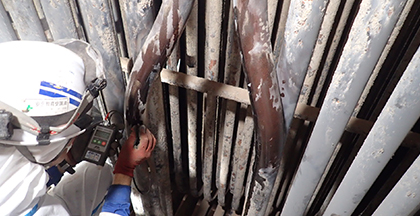
In municipal solid waste treatment plants, there is demand for renewal and life extension due to aging infrastructure. In wastewater treatment, there is a need for transitioning to energy-saving and energy-generating types in the renewal of sludge incineration plants. Additionally, for private sector businesses, there is demand for small- and medium-sized biomass power plants and fuel conversion to non-fossil fuels. It is expected that these trends will continue to remain strong for the time being. In addition, in the after-sales service sector, there are expectations for future expansion in demand for each product.
| Market environment |
|
|---|---|
| Strengths |
|
| Business strategy |
|
| Market environment |
|
|---|---|
| Strengths |
|
| Business strategy |
|
| Market environment |
|
|---|---|
| Strengths |
|
| Business strategy |
|
| Market environment |
|
|---|---|
| Strengths |
|
| Business strategy |
|
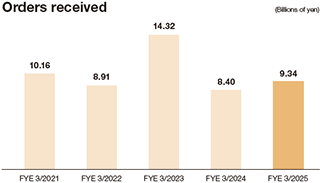
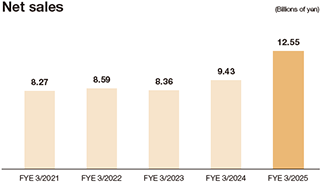
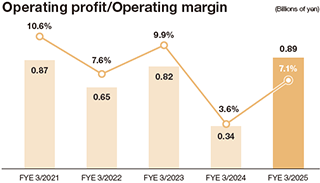
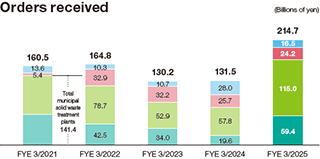
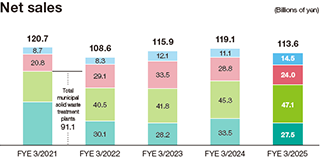
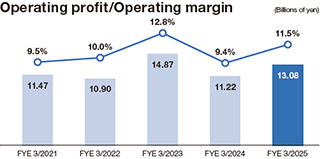
For FY3/2025, orders received increased significantly compared to the previous fiscal year, including two DBO projects and one primary equipment improvement project for municipal solid waste treatment plants, four energy plants, and one sludge incineration facility for a sewage treatment plant. Net sales decreased mainly due to changes in the project composition in the EPC business; however, operating profit increased thanks to growth in after-sales services and the elimination of impact from countermeasure costs for waste treatment plant O&M recorded in the second quarter of FY3/2024.
In response to the increasing demand for biomass power plants, as well as waste treatment due to urbanization in Southeast Asian countries, we provide plant construction and maintenance services primarily in Thailand and Taiwan, where we have local subsidiaries.
| Market environment |
|
|---|---|
| Strengths |
|
| Business strategy |
|
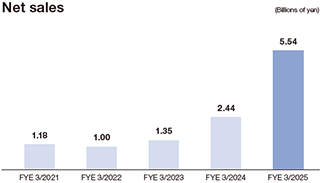
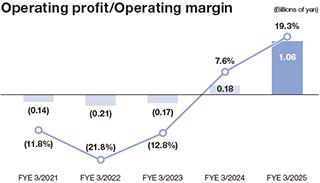
For FY3/2025, orders received saw a slight increase from the previous fiscal year, with no new plant orders but steady demand for maintenance. Net sales and operating profit saw a significant increase due to the progress of ordered new plant construction projects. Of the operating profit, approximately JPY 300 million is due to foreign exchange translation differences arising from the elimination of transaction amounts with overseas subsidiaries, and the same amount is adjusted as foreign exchange losses in non-operating expenses.
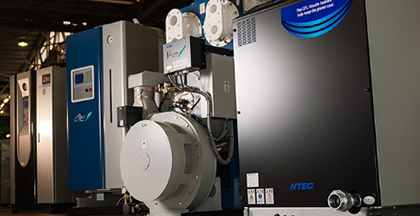
Group company, Nippon Thermoener Co., Ltd. is engaged in the manufacturing, sales, and maintenance of various heat source equipment, such as general purpose boilers and water heaters. Our main customers include production factories across various industries, as well as hotels, hospitals, commercial buildings, and other facilities.
| Market environment |
|
|---|---|
| Strengths |
|
| Business strategy |
|
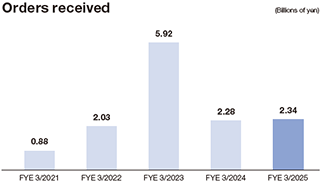
For FY3/2025, orders received increased compared to the previous fiscal year due to the continued moderate recovery trend in the market. Both net sales and operating profit increased due to a rise in orders and the progress of previously received projects. As part of the M&A activity in this business, Takuma acquired shares in IHI Packaged Boiler Co., Ltd., a company with high technical capabilities. Additionally, Nippon Thermoener acquired shares in Daiichi Sanki Co., Ltd., which handles small biomass boilers using by-products from the agricultural and livestock industries as fuel.
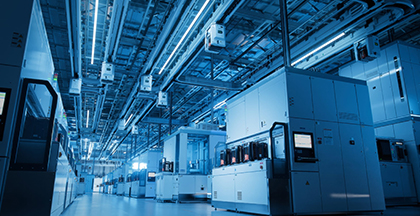
Group company Sunplant Co., Ltd. designs and installs building facilities, including air conditioning, plumbing and sanitation, and fire protection systems. Additionally, group company Dan-Takuma Co., Ltd. provides clean equipment and facilities, along with related services, to create highly clean peripheral environments required for semiconductor and electronic device manufacturing processes.
| Building Equipment Business | Semiconductor Industrial Equipment Business | |
|---|---|---|
| Market environment |
|
|
| Strengths |
|
|
| Business strategy |
|
|
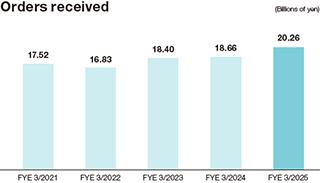
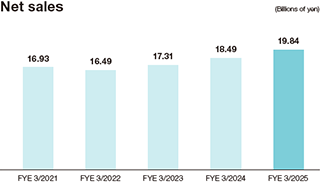
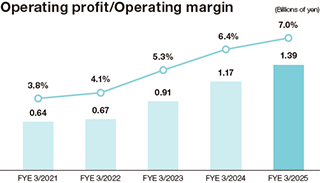
For FY3/2025, orders received increased compared to the previous fiscal year, mainly due to steady demand in the building equipment business. Additionally, net sales and operating profit increased significantly due to progress in already received orders and the elimination of the impact from additional costs recorded in some building equipment business projects in FY3/2024.