(Abstract)
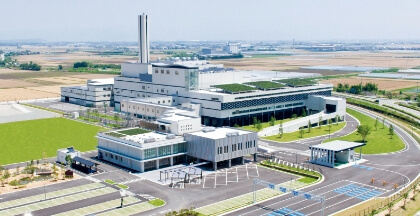
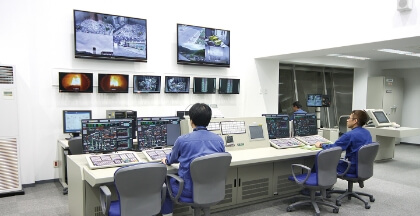
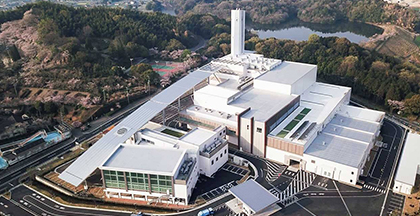
The Numagami Resources Circulation Center (hereafter, the center) is an intermediate treatment facility that was constructed as recycling plaza designed to recycle and reduce the volume of waste within a recycling-oriented society. The center consists of an incombustible and oversized waste recycling plant, plastic bottle recycling plant and slag recycling plant, and is capable of processing 160 tons of waste every five hours. The incombustible and oversized waste recycling plant is capable of processing 100 tons of waste every five hours and separates waste into four different categories: combustible, incombustible, steel and aluminum. CO concentration meters have been installed to detect fires as soon as possible in an effort to prevent major fires from starting. The slag recycling plant has been designed to sort the granularity of melted slag carried in from the adjacent ash melting plant so that it can be used effectively as a form of construction material (asphalt compound).
(Abstract)
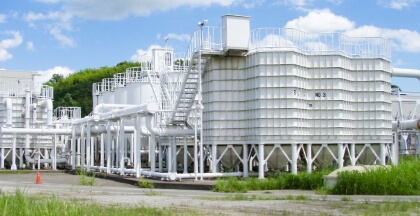
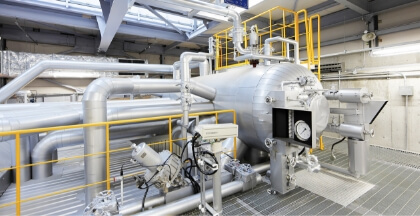
Waste heat boilers such as waste incinerators, which recover thermal energy from combustion gas that contains highly adhesive dust with a low melting point, can suffer from a reduction in thermal efficiency due to dust adhering to the surface of heating tubes. Dust removers are required in boilers to limit this adhesion and to ensure more reliable operation. While there are many different varieties of dust removers available, a design that can remove dust from horizontal tubes without the use of steam or similar vapors by subjecting tubes to shocks or vibrations, such as hammering devices used to remove dust from suspended heating tubes, has been developed. Tests conducted with the new dust remover installed within actual economizers revealed that thermal recovery efficiency was improved, and that there was no impact on the durability of the device or the heating tubes.
(Abstract)
In 2010, we received a request from the National Institute for Environmental Studies to conduct the "Gasification, gas purification and liquid fuel synthesis test by using waste wood and RPF (Refuse paper & Plastic Fuel) materials" .
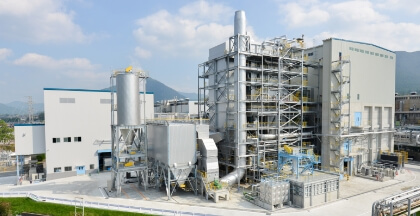
This test was conducted in the pilot scale gasification plant that employed fluidized bed gasifier and methanol production equipment. The temperatures of gasification were set to 750 and 810℃. The aims of this test were to evaluate gasification characteristics and tar decomposition by specific catalyst and to clarify the influence of gasification on methanol production result when using different feed stocks described above.
The results of the test showed that the carbon conversion efficiency from 91 to 99% and the cold gas efficiency from 59 to 66% were achieved. The tar concentration significantly decreased under the condition with the high gasification air ratio. No adverse effect on methanol production was observed in all the experiments.
(Abstract)
Issues related to environmental pollution due to chemicals seemed to be on the verge of being resolved in recent years following advancements in technology, however new issues have started to surface, including global warming due to the release of greenhouse gases, and the emission of radioactive substances, with no clear end in sight for environmental pollution. With these issues ever-present, environmental analysis is a vital technology for visualizing the state of pollution. This report outlines developments in the environmental analysis field with a key focus on various analysis technologies such as dioxins, air pollution, offensive odors, water quality, waste, asbestos and radiation. Considerations and the latest trends in analysis are also covered, including the state of recycling tests, physical tests and microanalysis.